
Utility and Telecom
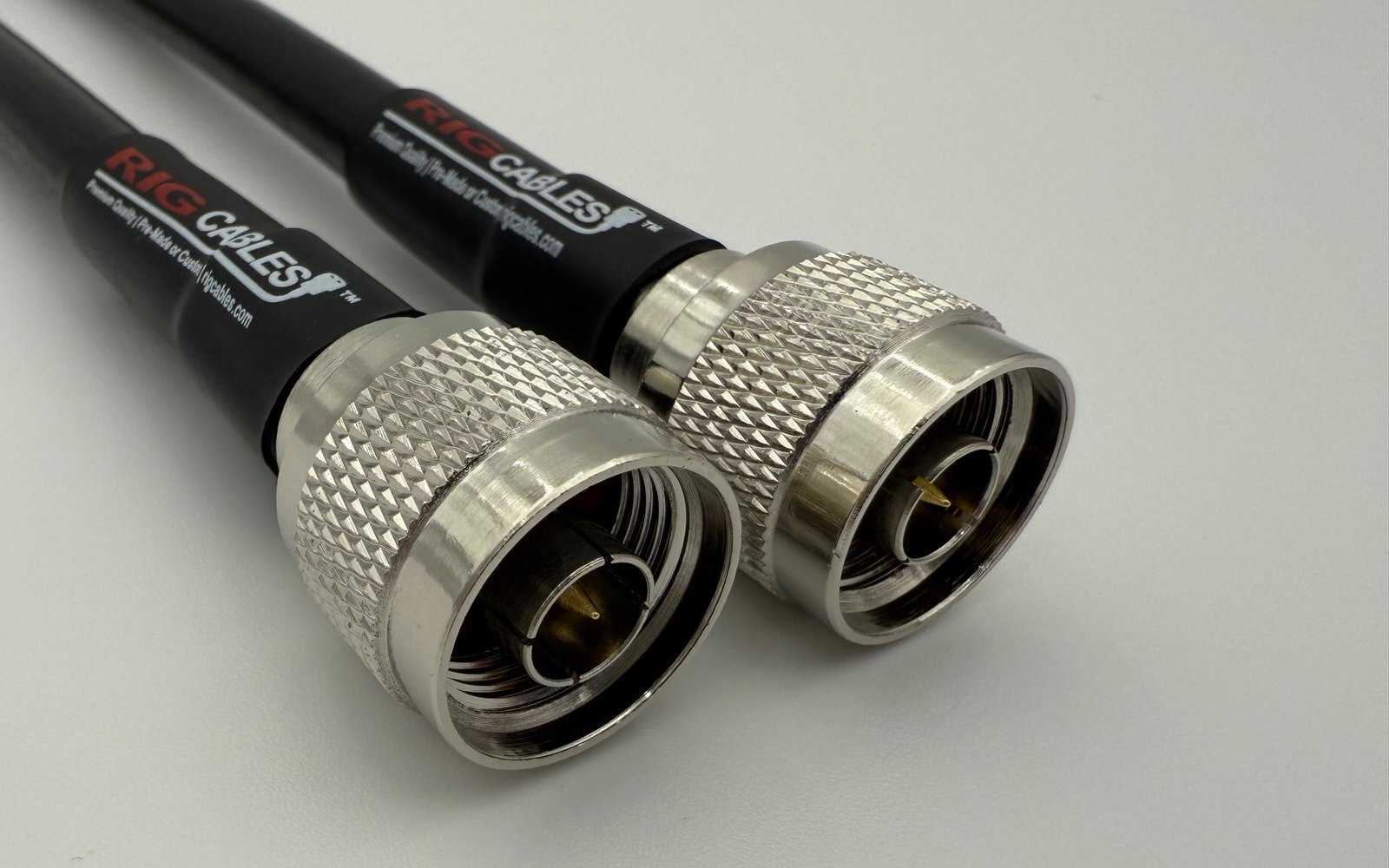
RF assemblies for utility SCADA and distribution automation
Custom-length Times Microwave LMR® jumpers and feeders, assembled in the United States with N and TNC connectors, tested before they ship, and available with a printed RF sweep. Built for reclosers, sectionalizers, RTUs, capacitor banks, and substation radios.
- Assembled in the USA
- Continuity and high-pot tested
- RF sweep on request
- One-year limited warranty
Why the jumper matters
A recloser, sectionalizer, or pole-top radio is only as reliable as the coaxial path between the radio and the antenna. A poorly terminated jumper, the wrong connector pair, or an untested assembly shows up later as a weak link in a fault-isolation or restoration scheme, and usually as a truck roll.
Grid-modernization and distribution-automation programs also need the same assembly, built the same way, across many sites. That means a specified cable and connector pair, a documented length, weather-resistant terminations, and test data you can file with the work package. Rig Cables builds those assemblies to your drawing or description, one at a time or as a volume run on a weekly delivery schedule.
Applications
These assemblies are used wherever a licensed narrowband or private LTE radio has to reach an antenna from a control cabinet, pad mount, pole, or substation. Common radios in this work include Aviat / 4RF Aprisa (TNC antenna ports are typical on Aprisa SR+) and GE MDS, as well as other 700 MHz and 900 MHz utility wireless equipment. Cabinet-to-antenna runs are commonly LMR-400 with N connectors.
- Recloser and sectionalizer radio links
- Line isolation, sectionalizing, and FLISR / auto-restoration schemes
- Capacitor-bank and other distribution controls
- RTU and pole-top or pad-mount SCADA cabinet radios
- Substation yard and control-house jumpers
- Private LTE and licensed 700 MHz or 900 MHz utility wireless
- Telecom and operational telephone (OpTel) infrastructure
Typical assemblies
| Cable | Connectors | Typical use |
|---|---|---|
| LMR-240 or LMR-240UF | N-male to TNC-male | Short radio jumper from a TNC radio port to an N bulkhead or feeder. About 3 feet is a common cabinet jumper. |
| LMR-400 | N-male to N-male | Cabinet-to-antenna or yard feeder. A 35-foot run is a common outdoor length. |
| LMR-400UF Ultraflex | N or TNC, as specified | Same duty as LMR-400 when the route inside the enclosure needs a tighter bend. |
| LMR-600 | N-male; 7-16 DIN available | Longer or lower-loss feeders when the specification calls for it. |
| CommScope FSJ1-50A | N, TNC, SMA, or UHF | Superflexible 1/4-inch HELIAX jumpers when the specification requires them. |
| CommScope LDF4-50A | N-male standard; others on request | 1/2-inch HELIAX corrugated hardline for longer runs when the specification requires it. |
| Davis RF Bury-Flex (400-series) | N or as specified | Direct-burial or exposed outdoor runs that need a UV-resistant PE jacket. |
Lengths, connector gender, and right-angle options are built to the job. The product pages list lengths from 1 to 200 feet, with N, TNC, UHF (PL-259 / SO-239), BNC, and SMA among the standard interfaces.
Why Rig Cables
- Assembled in the United StatesBuilt at our shop in Moultonborough, New Hampshire. Family-owned.
- Built to your specificationWe will help you choose cable and connectors when the radio and route are known but the bill of materials is not.
- Genuine cable and connectorsOriginal-manufacturer Times Microwave LMR® cable, with Amphenol N and TNC connectors available. No substitute cable, no counterfeit connectors.
- Precision assemblyCable is prepared on Schleuniger automated stripping equipment, held to 1/1000 of an inch. The center pin is soldered, the braid is crimped, and the joint is covered with adhesive heat shrink.
- Tested before it shipsEvery assembly is checked for continuity and high-voltage (high-pot) integrity, then inspected before it ships.
- Test data and labels on requestWe can include an RF sweep of the assembly from our spectrum analyzer and tracking generator, supplied on the web, as a PDF, or printed, and tied to a serial or lot number. Tell us the test band and the VSWR limit your specification calls for. Custom printed labels on each end are also available.
- OEM and private labelOEM and private-label assemblies are available for contractors and integrators.
- One-year limited warrantyCovers defects in material and workmanship for one year from the date of shipment. See our Terms and Conditions.
How to order or request a quote
For a standard length and connector pair, you can configure an assembly on the Custom Coax Cable Builder and on the LMR-240 and LMR-400 product pages. Many of those configurations are listed as usually shipping in 24 hours. Assemblies ordered through the Custom Coax Cable Builder typically ship within two days.
For a utility specification, a mixed bill of materials, or a volume rollout, email the details below to sales@rigcables.com or use the Contact Us form. We will come back with a quote, a lead time, and a delivery plan.
- Send the applicationRadio or enclosure type if you have it, and whether the run is a short cabinet jumper or a cabinet-to-antenna feeder.
- Specify the assemblyCable type, length, and connectors on each end (for example, 3 ft LMR-240 N-male to TNC-male, or 35 ft LMR-400 N-male to N-male). Include quantity and any preferred weekly delivery rate.
- Say what should ship with itRF sweep (web, PDF, or printed) with the test band and VSWR limit, serial or lot numbering, custom labels, a drawing or specification number, and any packaging or lot-marking requirements.
- Receive a quoteWe confirm the construction, test options, price, and schedule before we build.
- Sales email
- sales@rigcables.com
- Phone
- (603) 890-0401
Questions
What connectors do utility SCADA radios usually take?
Many licensed point-to-multipoint radios in this class, including Aviat / 4RF Aprisa SR+, use 50-ohm TNC female antenna ports. Other platforms use N, and some cellular or private-LTE equipment uses SMA. The antenna and bulkhead side is often N. If you tell us the radio and the antenna, we will confirm the pair before we build.
Do you sweep-test the assemblies?
Every assembly is tested for continuity and high-pot. An RF sweep from our spectrum analyzer and tracking generator is available when you request it, including on Custom Coax Cable Builder orders. We can supply it on the web, as a PDF, or as a printout, keyed to a serial or lot number, run at the band you specify (700 MHz, for example), and checked against the VSWR limit in your specification.
Is the cable genuine Times Microwave LMR?
Yes. We use original-manufacturer Times Microwave LMR cable, and Amphenol N and TNC connectors are available. We do not substitute no-name cable or counterfeit connectors.
Can you build to our specification, including labels?
Yes. Send a drawing, a bill of materials, or a written description. Custom printed labels on each end are available, which is useful when a work package calls for a circuit ID or material number on the jumper.
What are typical lead times?
Many configured assemblies are listed as usually shipping in 24 hours. Custom Coax Cable Builder orders typically ship within two days. Some connector options are special-order or carry a longer stated ship time on the product page. Volume programs and mixed lots are quoted with a schedule.
Can you support a multi-site rollout?
Yes. We can quote identically built, tested assemblies as a volume run, including delivery on a weekly schedule.
Where are the cables assembled?
In the United States, at Rig Cables in Moultonborough, New Hampshire.
Do you build private-label or OEM assemblies?
Yes. OEM and private-label cable assemblies are part of what we offer, including for contractors and system integrators who need a consistent assembly under their own program labels.
LMR® is a registered trademark of Times Microwave, an Amphenol Company. Aprisa, MDS, and other product names are trademarks of their respective owners. Rig Cables is not affiliated with those manufacturers.